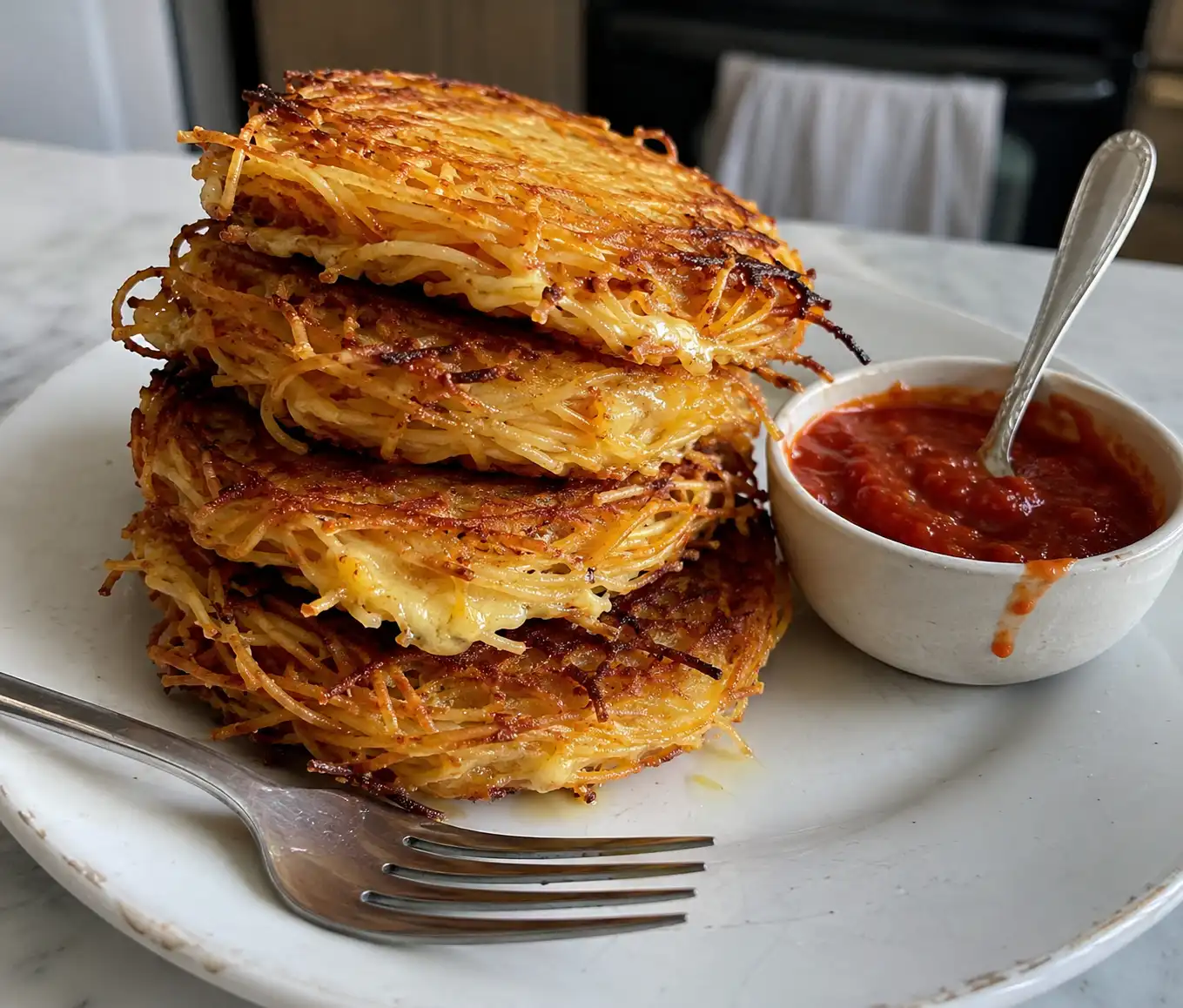
There is a special kind of magic in turning yesterday’s spaghetti into something that feels like a completely new meal. These crispy leftover spaghetti cakes take cold, leftover noodles and transform them into golden, pan fried patties with crunchy edges and a soft, cheesy center. It is one of the easiest ways to make sure last night’s dinner never goes to waste, and honestly, some people end up preferring these to the original plate of pasta.
This recipe has become a favorite for anyone trying to cut down on food waste without sacrificing flavor. It comes together in under twenty minutes, needs almost no extra ingredients beyond what is already sitting in the fridge, and turns a slightly sad container of cold pasta into a genuinely exciting dinner or snack.
Why Leftover Spaghetti Cakes Are Special
Cold spaghetti actually works better for this recipe than freshly cooked pasta, since the noodles firm up slightly in the refrigerator, making them easier to shape and hold together in the pan. As the cakes cook, the exposed pasta strands crisp up beautifully against the hot surface, creating a wonderful contrast between the crunchy exterior and the soft, cheesy interior.
This dish also happens to be one of the most practical ways to reduce food waste in your kitchen. Instead of reheating leftover spaghetti the same way every time, transforming it into something entirely different keeps dinner interesting and ensures that extra pasta from taco night, meal prep, or a big family dinner never gets forgotten at the back of the fridge.
Also Read: Baked Feta Pasta: The Viral One Pot Pasta Recipe
Also Read: Easy Garlic Butter Shrimp Pasta Recipe (Creamy & Flavorful)
Ingredients You Will Need
This recipe relies almost entirely on what you already have leftover, plus a small handful of pantry staples to bind everything together.
For the Spaghetti Cakes
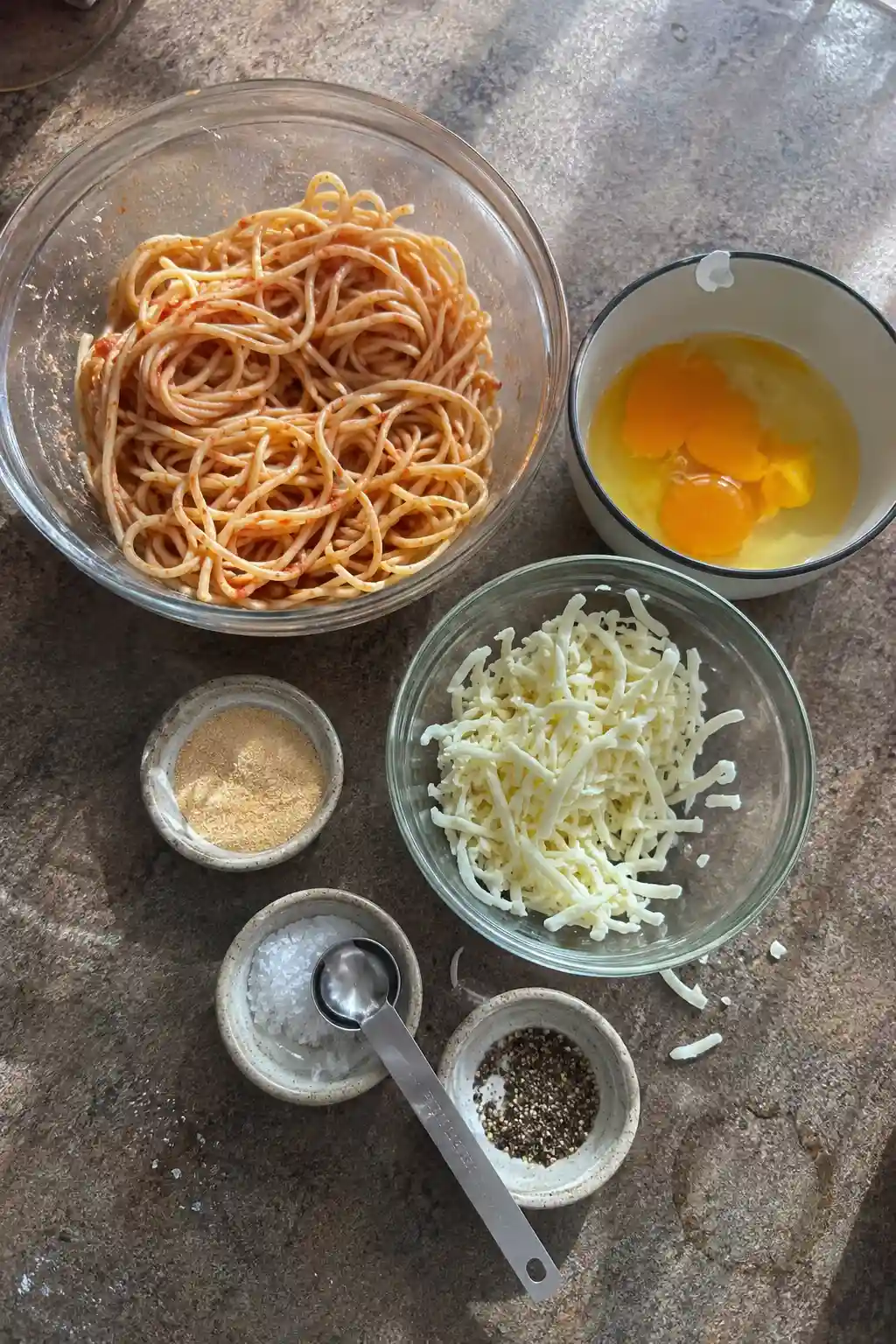
You will need about three cups of cold, leftover spaghetti, sauced or plain, along with beaten eggs to help bind the noodles together. A generous handful of shredded mozzarella or parmesan cheese adds richness and helps the cakes hold their shape, while a bit of garlic powder, salt, and pepper rounds out the seasoning.
For Cooking
A neutral oil or butter is needed for pan frying the cakes until golden and crisp on both sides.
How to Make Crispy Spaghetti Cakes Step by Step
This recipe comes together quickly, and most of the effort is simply mixing everything together before it hits the pan.
Step One Mix the Ingredients
In a large bowl, combine the cold leftover spaghetti, beaten eggs, shredded cheese, garlic powder, salt, and pepper. Use your hands or a fork to toss everything together until the noodles are evenly coated and the mixture holds together when pressed.
Step Two Shape the Cakes
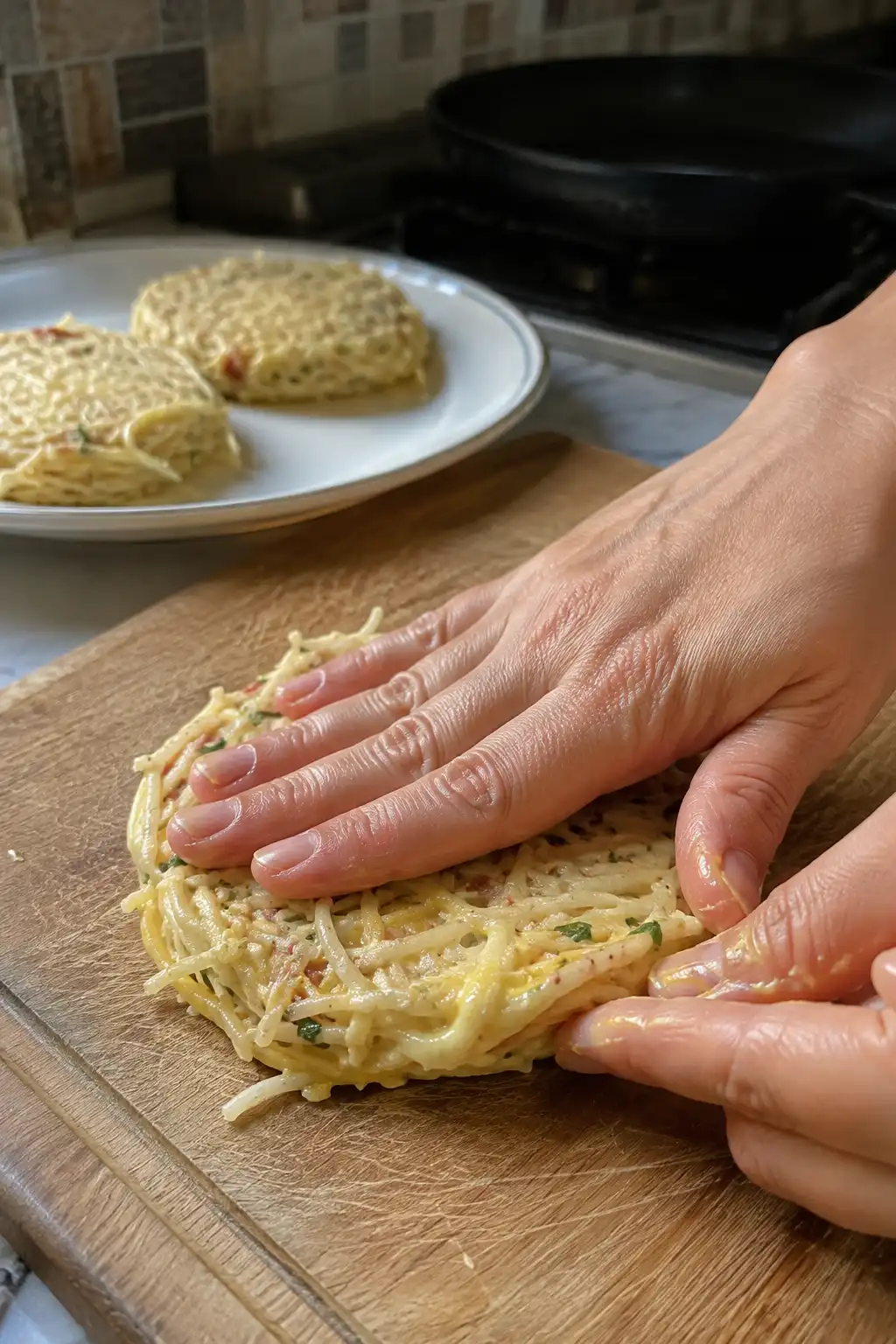
Divide the mixture into small, even portions and press each one firmly into a flat, round patty about half an inch thick. Pressing firmly here helps the cakes hold their shape once they hit the hot pan.
Step Three Heat the Pan
Heat a thin layer of oil or butter in a large non-stick or cast iron skillet over medium heat. Once the oil is shimmering, you are ready to add the spaghetti cakes.
Also Read: Chicken Orzo Bake: Creamy, Cheesy One Dish Casserole
Step Four Fry Until Golden
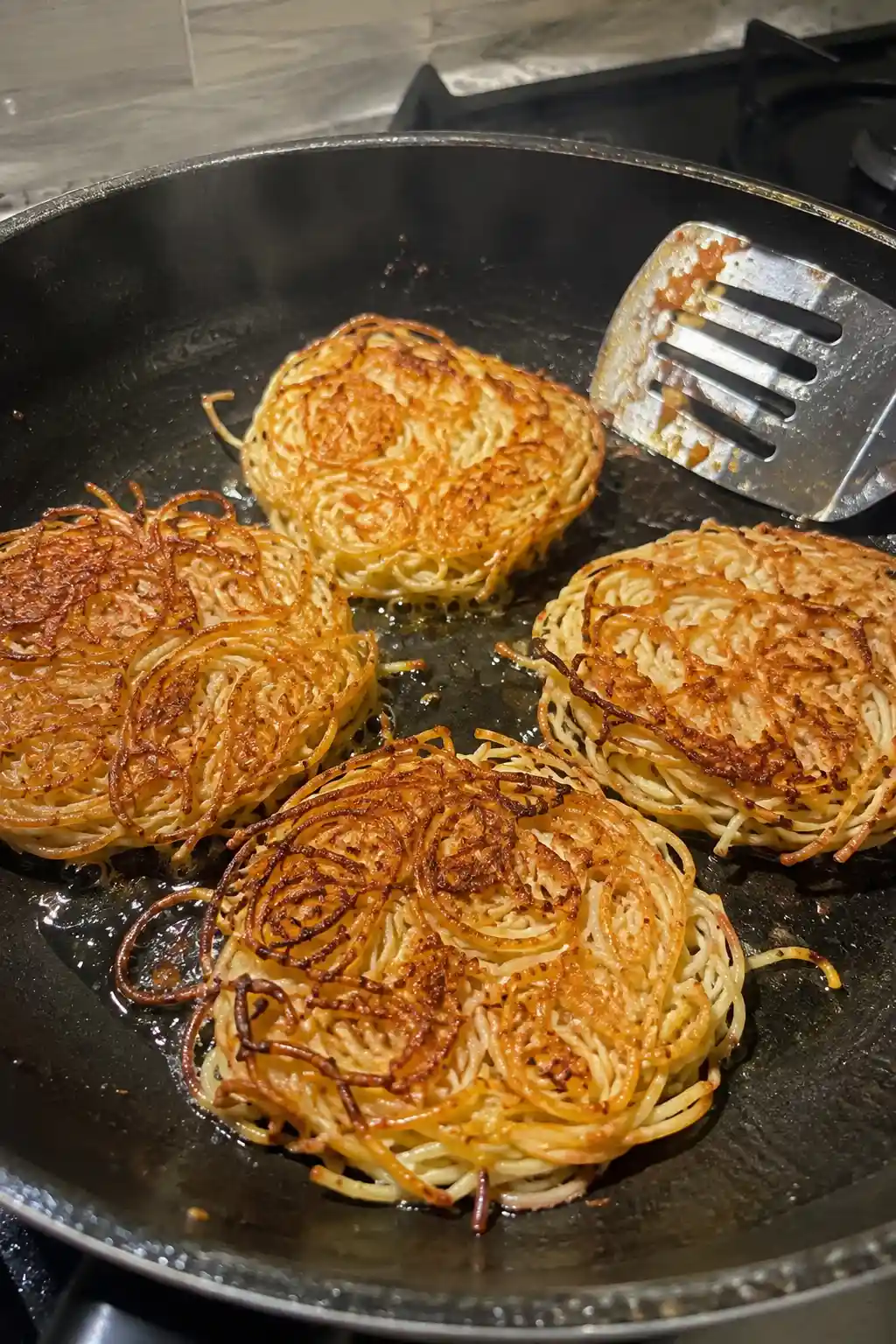
Carefully place the spaghetti cakes into the hot skillet, leaving space between each one. Cook for three to four minutes per side, pressing down gently with a spatula, until both sides turn deeply golden and crisp.
Step Five Drain and Serve
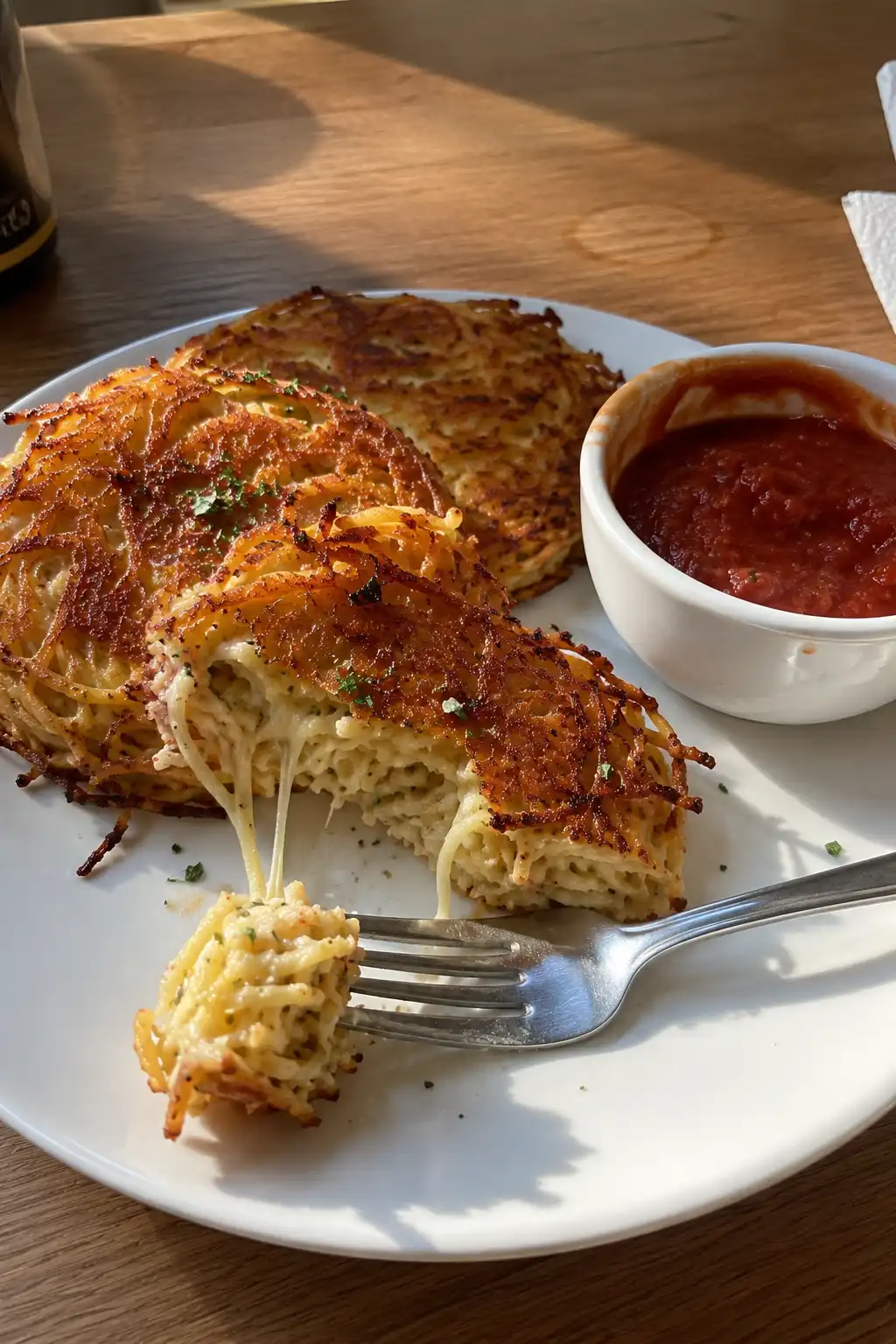
Transfer the finished cakes to a plate lined with a paper towel to absorb any excess oil. Serve warm with a side of marinara sauce for dipping, or top with a sprinkle of fresh parmesan and herbs.
Tips for the Crispiest Spaghetti Cakes
A few small details can make a noticeable difference in how these cakes turn out. Using cold, leftover spaghetti straight from the fridge works far better than freshly cooked pasta, since the noodles have had time to firm up and hold their shape more easily.
Pressing the cakes firmly when shaping them helps prevent them from falling apart in the pan, and resisting the urge to flip them too early gives the bottom side enough time to develop a proper golden crust. If your cakes seem to be falling apart while cooking, an extra egg mixed into the batter usually helps bind everything together more securely.
Delicious Variations to Try
This recipe is wonderfully forgiving and easy to customize based on what leftovers you have on hand. If your leftover spaghetti already has meat sauce mixed in, simply proceed as written for an even heartier cake. Stir in chopped fresh herbs like basil or parsley for extra flavor, or add a pinch of red pepper flakes if you want a bit of heat.
For an Italian inspired twist, mix in a spoonful of ricotta cheese along with the mozzarella for an even creamier center. Leftover plain buttered noodles work just as well as sauced spaghetti, simply season the mixture a bit more generously to make up for the milder base flavor.
What to Serve with Spaghetti Cakes
These crispy cakes work well as an appetizer, a side dish, or even a light main course depending on portion size. A simple green salad with a light vinaigrette pairs beautifully alongside them, balancing out the richness of the cheese and crispy exterior. Marinara sauce is the classic dipping choice, though a garlicky aioli or a spoonful of pesto also make wonderful alternatives.
Crispy Leftover Spaghetti Cakes
Ingredients
Equipment
Method
- Mix the Ingredients – In a large bowl, combine cold spaghetti, beaten eggs, shredded cheese, garlic powder, salt, and pepper. Toss until evenly coated and the mixture holds together when pressed.
- Shape the Cakes – Divide the mixture into small, even portions and press each firmly into a flat round patty about half an inch thick.
- Heat the Pan – Heat oil or butter in a large skillet over medium heat until shimmering.
- Fry Until Golden – Add the spaghetti cakes to the hot skillet, leaving space between each. Cook 3 to 4 minutes per side, pressing gently with a spatula, until golden and crisp on both sides.
- Drain and Serve – Transfer to a paper towel lined plate to drain excess oil. Serve warm with marinara sauce for dipping.
Notes
Make Ahead and Storage Tips
This recipe is a fantastic way to use up leftovers, and the finished cakes themselves also store and reheat well. Once cooled, store cooked spaghetti cakes in an airtight container in the refrigerator for up to four days.
To reheat, a skillet over medium heat works best for bringing back that crispy texture, since microwaving tends to leave them softer. These cakes also freeze well, either before or after cooking. If freezing uncooked patties, place them in a single layer on a baking sheet until firm, then transfer to a freezer bag for up to two months, cooking directly from frozen with a slightly longer cook time.
Frequently Asked Questions
Can I use fresh spaghetti instead of leftovers
Yes, though the texture works best with pasta that has had time to cool and firm up in the refrigerator for at least a few hours. Freshly cooked, still warm spaghetti tends to be too soft and can make the cakes harder to shape.
Can I bake these instead of frying them
Yes, for a lighter version, arrange the shaped cakes on a parchment lined baking sheet, brush lightly with oil, and bake at four hundred degrees Fahrenheit for about twenty minutes, flipping halfway through, until golden.
What if my leftover spaghetti already has sauce on it
That works perfectly well and actually adds extra flavor to the finished cakes. Simply proceed with the recipe as written, since the sauce will help bind the noodles together even further.
Can I make these cakes without eggs
Eggs help bind the mixture together, so an egg substitute like a flax egg can work in a pinch, though the cakes may be slightly more delicate to flip.
Final Thoughts
These crispy leftover spaghetti cakes prove that yesterday’s dinner does not have to mean a boring repeat meal. With just a few extra ingredients and a hot skillet, cold pasta transforms into something crispy, cheesy, and genuinely craveable. Keep this recipe in your back pocket for the next time you find leftover spaghetti in the fridge, since it might just become the meal you look forward to more than the original.