There is a particular kind of dinner that exists almost entirely to prove a point: that the best meals do not require a shopping trip, a special occasion, or a recipe you have been building toward all week. Chicken puttanesca is that dinner. It is loud with flavor, built from the kind of ingredients that sit quietly in the back of a pantry for months, and yet somehow tastes like something you would order at a small, unfussy Italian restaurant where the kitchen clearly knows exactly what it is doing.
This is not a delicate dish, and it does not try to be. Salty olives, briny capers, and anchovies that disappear into the sauce entirely rather than announcing themselves, all simmered around bone in chicken thighs until the meat is falling tender and the sauce has thickened into something you want to eat with a spoon. It is bold in a way that feels earned rather than aggressive, and it manages to do all of that in under an hour, mostly hands off, mostly from cans and jars already sitting in your cupboard.
A Sauce With a Reputation It Has Never Quite Escaped
Ask five different people where puttanesca sauce comes from and you will likely get five different answers, and a few raised eyebrows along the way. The name itself has a colorful, somewhat contested history rooted in Neapolitan slang, and food historians still debate whether the dish originated with sailors needing a fast, pantry based sauce between shifts, or with a Naples restaurant owner in the 1950s who threw together whatever was on hand for a late night table of hungry customers.
What nobody debates is the flavor profile that emerged from that origin story, whichever version you choose to believe. It is a sauce built entirely on preserved, high impact ingredients, the kind that keep for months and deliver flavor far beyond what their humble appearance suggests.
Also Read: Loaded Chicken Hash Skillet: Crispy, Cheesy Breakfast Recipe
Also Read: Easy One-Pot Chicken and Rice: Comforting Weeknight Dinner
Adding chicken to that sauce is less a departure from tradition and more a natural evolution of it. Puttanesca has always been a dish built around whatever protein or starch happened to be on hand, and bone in chicken thighs, simmered directly in that same bold tomato base, absorb every bit of the sauce’s briny intensity while contributing their own richness back into it. The result tastes less like a pasta sauce with chicken added, and more like a fully realized braise that happens to share puttanesca’s DNA.
The Pantry Doing All the Heavy Lifting
Part of what makes this dish so quietly impressive is how little it actually asks of you at the grocery store. Almost everything involved has a shelf life measured in months, not days, which means this can become the dinner you make when the fresh produce drawer is embarrassingly empty and you still want something that tastes intentional.
The Chicken
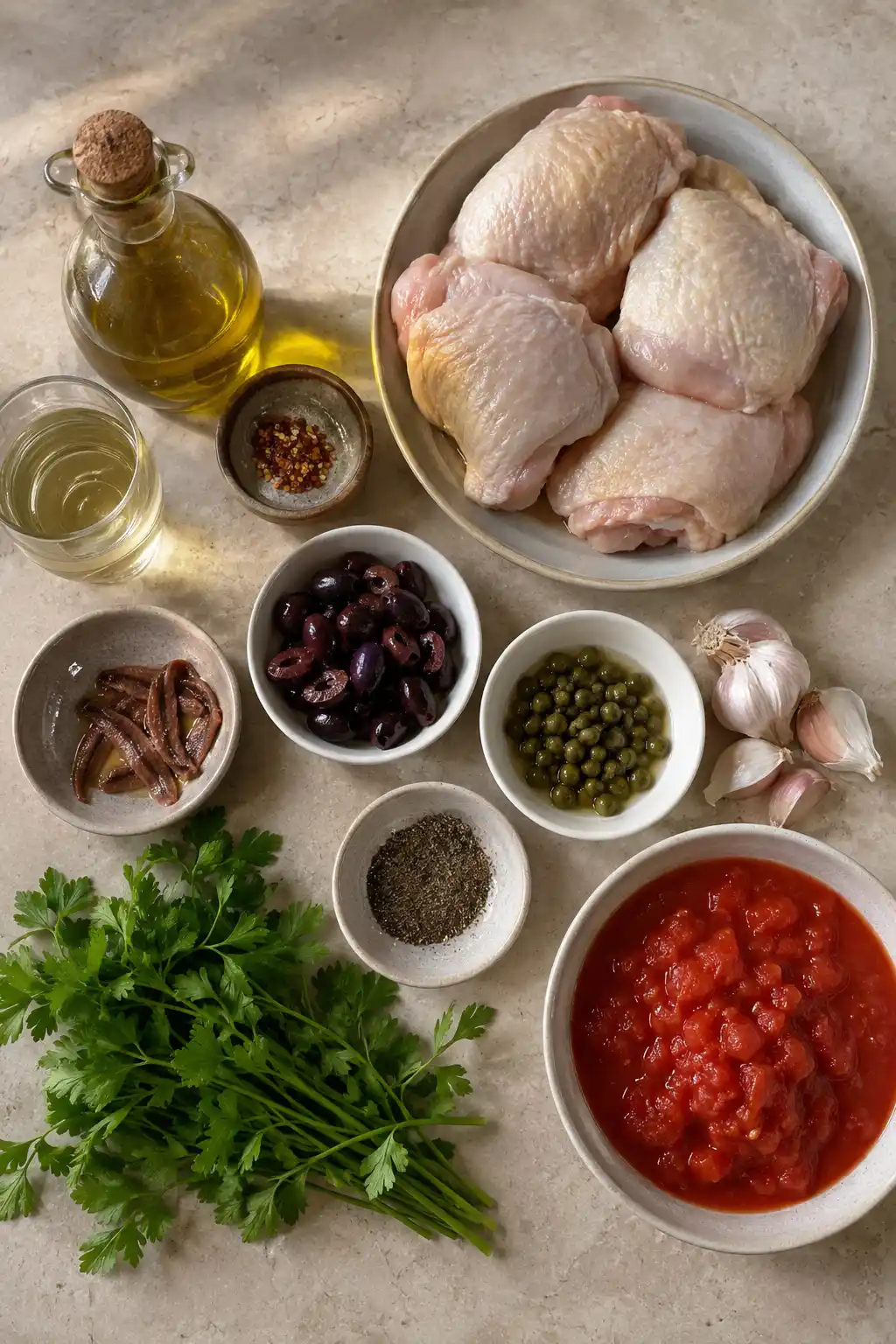
Bone in, skin on chicken thighs are non negotiable here if you want the dish at its best. The bone slows the cooking just enough to keep the meat from drying out during the simmer, while the skin, seared properly before it ever meets the sauce, holds onto real texture even after twenty five minutes surrounded by liquid. Boneless thighs will work in a pinch, but something is lost in the trade.
The Sauce Base
A large can of crushed tomatoes forms the foundation, chosen specifically over diced tomatoes for the smoother, more cohesive texture it gives the finished sauce. Good olive oil matters more than usual in a dish this ingredient forward, since it is doing real flavor work rather than simply serving as a cooking medium.
The Briny Backbone
Kalamata olives, capers, and anchovy fillets are the three ingredients that actually define this dish, and none of them are optional if you want the real thing. Garlic and red pepper flakes round out the aromatics, while a modest amount of dried oregano adds a familiar, herbaceous undertone that ties the whole sauce together.
Building the Dish, One Deliberate Layer at a Time
This recipe rewards patience in a few specific places and is entirely forgiving everywhere else, which is exactly the kind of balance that makes a dish worth cooking on a regular Tuesday.
First, the Sear That Actually Matters
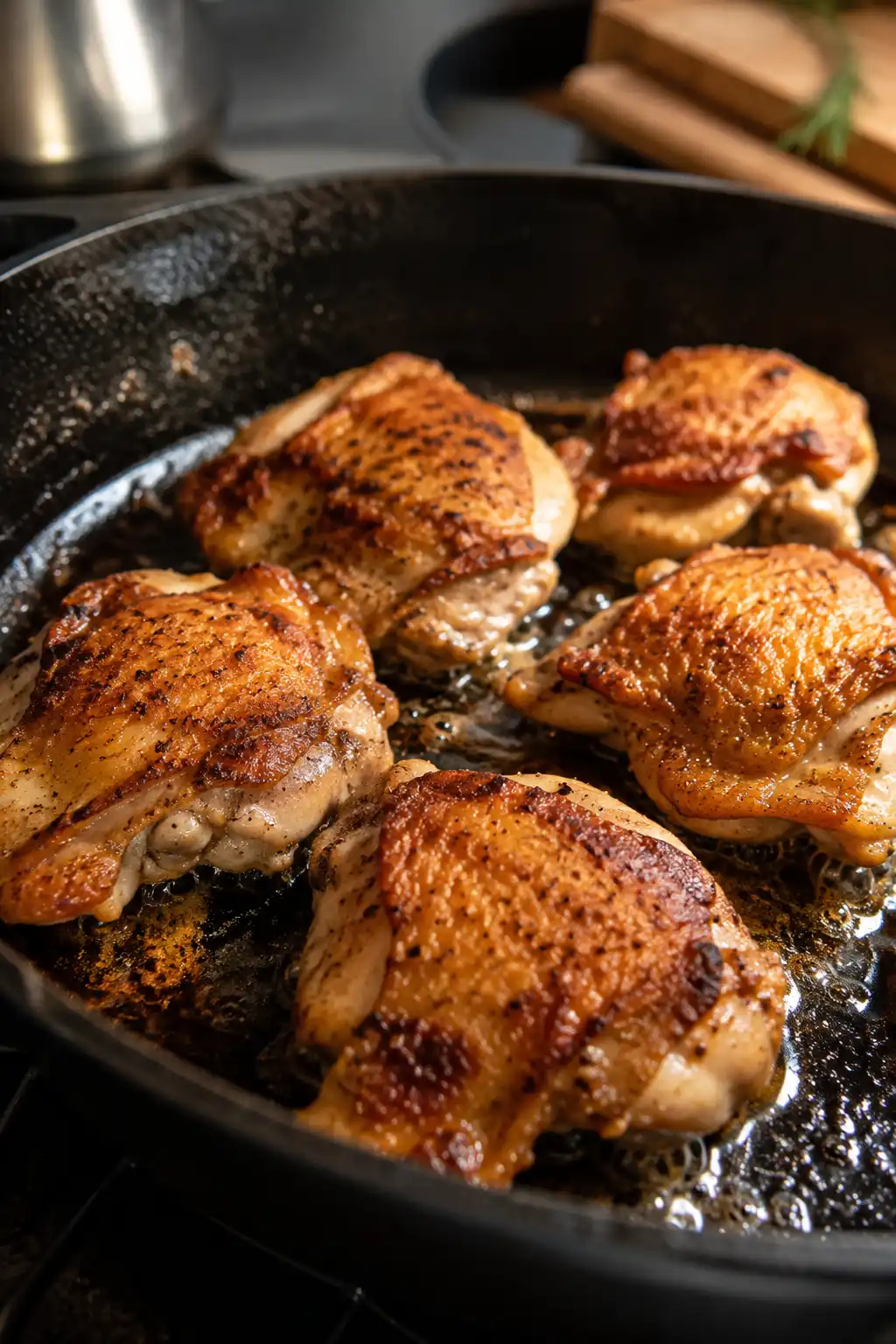
Pat the chicken thighs completely dry before they touch the pan, since any surface moisture will steam the skin instead of crisping it. Season generously with salt and pepper, then place them skin side down in a hot skillet with olive oil and leave them alone. Do not move them, do not peek underneath, do not rush this. Five to six full minutes of undisturbed contact with the hot pan is what builds a crust genuinely capable of surviving a twenty five minute simmer. Flip and give the other side three more minutes, then pull the chicken out entirely and set it aside.
Then, the Sauce Wakes Up in the Same Fat
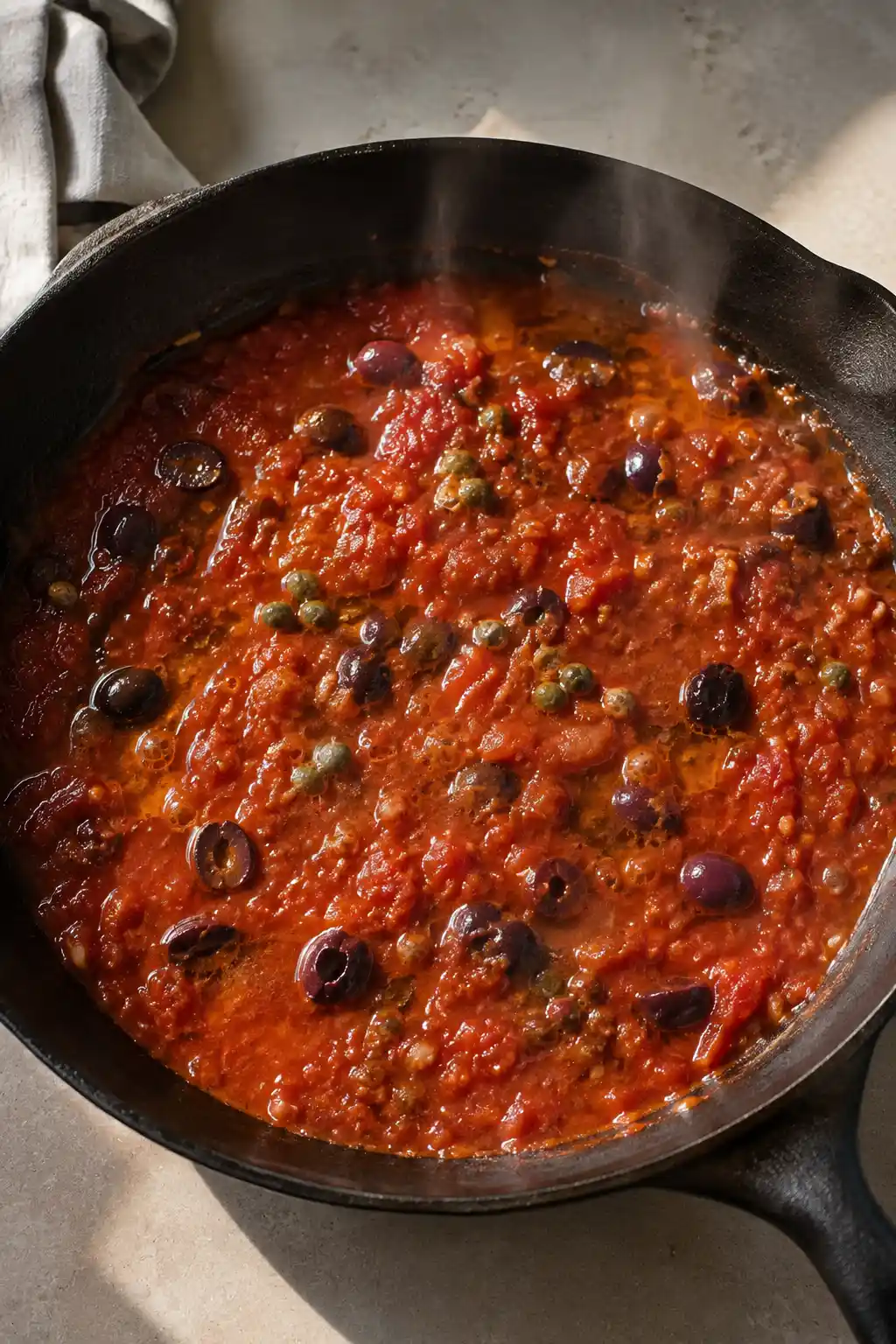
Lower the heat slightly, since the pan is now hot enough to scorch garlic in seconds. Add minced garlic, chopped anchovy fillets, and red pepper flakes directly into that same skillet, still coated in the rendered chicken fat and browned bits left behind from searing. Stir and gently break up the anchovies with the back of a spoon as they cook, watching them essentially dissolve into the oil within about a minute. This is the moment the entire dish pivots from simple browned chicken toward something with real depth. Pour in the crushed tomatoes, olives, and capers, along with the oregano, stirring everything together and scraping up every last browned bit clinging to the bottom of the pan.
Now, Return the Chicken and Let Time Do the Rest
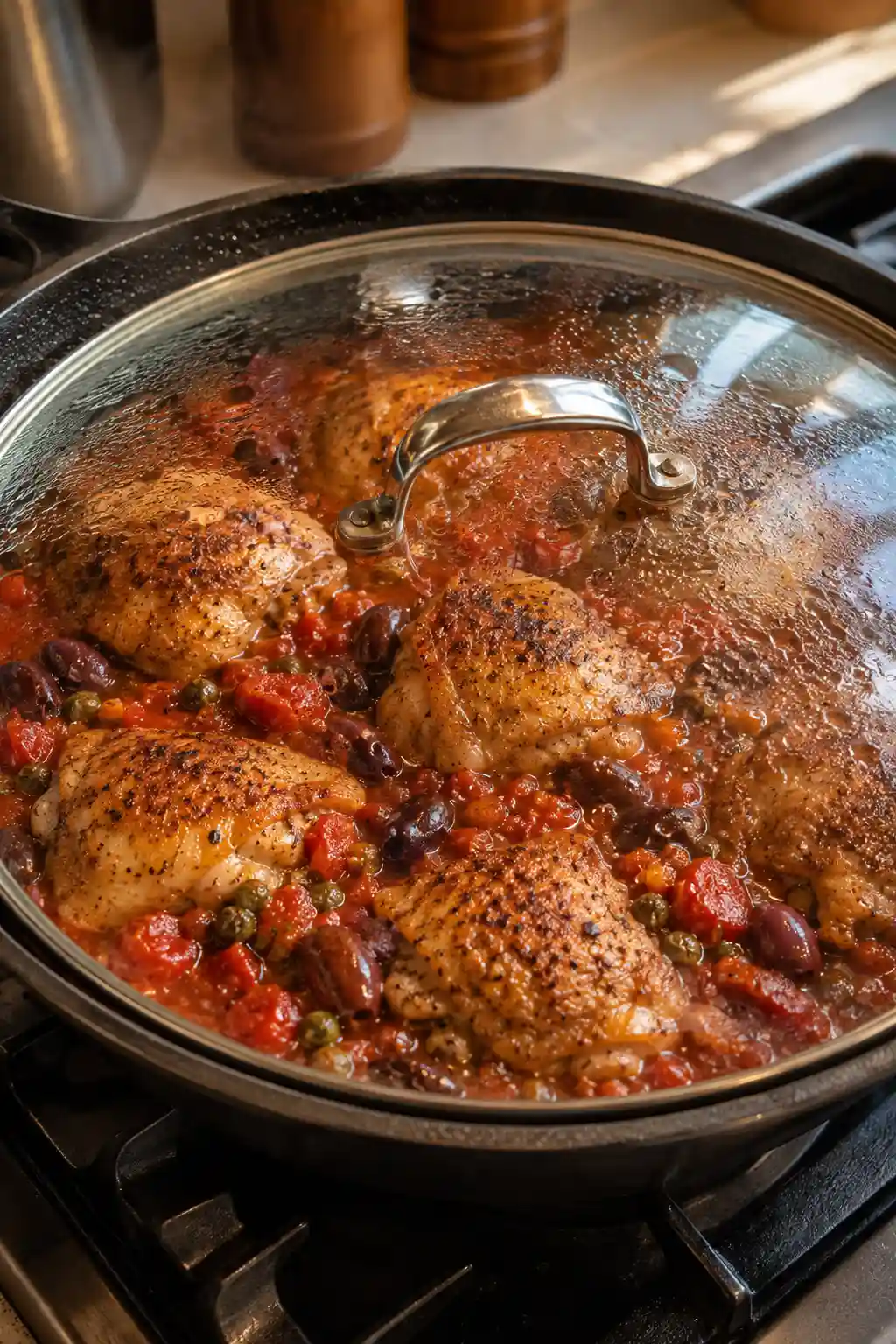
Nestle the seared chicken thighs back into the sauce, positioning them skin side up so that hard earned crust stays above the liquid line rather than softening beneath it. Bring everything to a gentle simmer, then drop the heat to low, cover the pan partially, leaving a small gap for steam to escape, and let it cook undisturbed for twenty five to thirty minutes. You are looking for an internal chicken temperature of one hundred sixty five degrees Fahrenheit and a sauce that has visibly thickened and deepened in color, no longer looking like canned tomatoes but something closer to a proper braise.
Finally, a Small Finishing Touch That Changes Everything
Remove the skillet from heat and scatter torn fresh basil or roughly chopped parsley across the top. That single handful of fresh herbs, added at the very last second rather than cooked into the sauce, cuts through the richness and briny intensity just enough to keep every bite interesting rather than one note. Serve directly from the skillet, since this is not a dish that benefits from being transferred to a serving platter and losing its heat along the way.
Making Peace With the Anchovies
If there is one ingredient in this recipe that tends to make people pause at the grocery store, it is the small tin of anchovy fillets sitting quietly on the shelf. That hesitation is almost always rooted in a misunderstanding of what anchovies actually do once they hit hot oil. They do not stay whole, they do not taste distinctly fishy, and they certainly do not announce themselves on the plate.
Instead, they dissolve almost entirely into the fat within about sixty seconds, leaving behind a savory, umami rich foundation that makes the rest of the sauce taste more complete, in much the same understated way a splash of fish sauce or a spoonful of miso works invisibly in so many other dishes around the world.
If genuine skepticism remains, start with two fillets rather than four and build confidence from there. But leaving them out entirely is the single change most likely to leave this dish tasting flatter and noticeably less complex than the version that made puttanesca famous in the first place.
The Two Mistakes That Actually Matter
Almost everything else in this recipe is forgiving, but two specific missteps consistently separate a good result from a great one.
The first is rushing the sear. A chicken thigh dropped into a pan that is not quite hot enough, or flipped after only two or three impatient minutes, will never develop the kind of crust that survives a long simmer. The skin turns soft and slightly rubbery instead, an entirely different texture than what this dish is meant to deliver. There is no substitute for the full five to six minutes of undisturbed contact with a properly heated pan.
The second is reaching for the salt shaker too early. Between the olives, the capers, and the anchovies, this sauce arrives with a significant amount of built in salinity before a single extra pinch is added. Taste before seasoning further, and resist the instinct to salt on autopilot the way you might with a blander dish. More often than not, you will find the sauce needs little to no additional salt at all.
What Belongs on the Table Alongside It
Puttanesca has deep roots as a pasta sauce, and that pairing remains the most natural home for this chicken forward version as well. A bed of spaghetti or linguine tossed directly in the extra sauce left in the pan turns this into a genuinely restaurant caliber plate, the noodles soaking up every bit of that briny, tomato rich liquid. For anyone skipping pasta entirely, a thick slice of crusty bread does nearly the same job, perfect for dragging through whatever sauce remains once the chicken itself is gone.
A simple green salad, dressed sharply with lemon or vinegar, earns its place on the table here more than almost anywhere else. Something about its clean acidity resets the palate against the richness and salt of the main dish, making each return bite of chicken taste as vivid as the first.
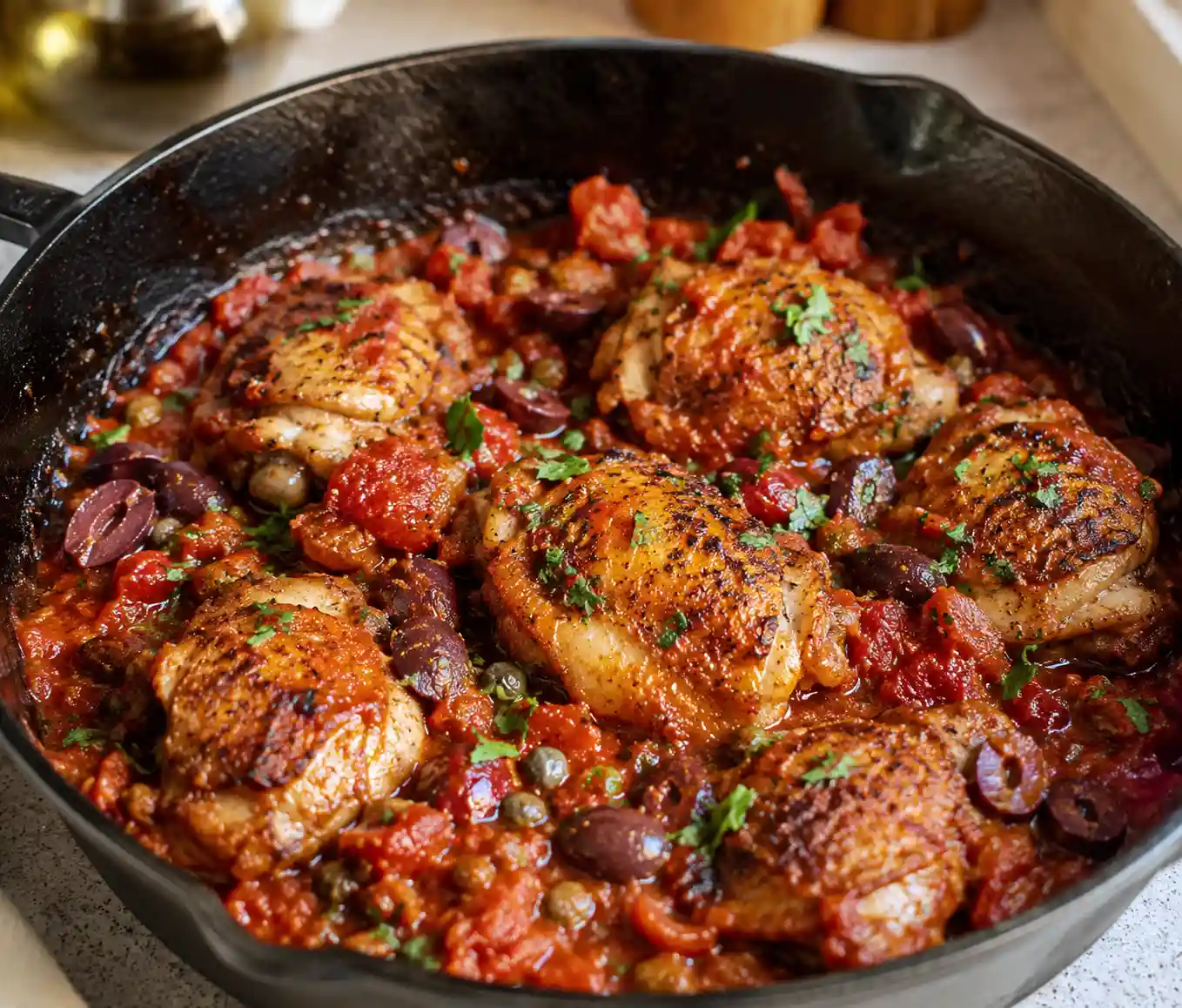
Chicken Puttanesca
Ingredients
Equipment
Method
- Sear the Chicken – Pat chicken thighs dry and season with salt and pepper. Heat olive oil in a large skillet over medium high heat and sear skin side down for 5 to 6 minutes, until golden and crisp. Flip and sear the other side for 3 minutes. Remove to a plate.
- Build the Sauce – Lower heat slightly. Add garlic, anchovies, and red pepper flakes to the same skillet, stirring until anchovies dissolve, about 1 minute. Add crushed tomatoes, olives, capers, and oregano, stirring to combine and scraping up browned bits.
- Simmer – Nestle chicken back into the sauce, skin side up. Bring to a gentle simmer, reduce heat to low, cover partially, and cook 25 to 30 minutes, until chicken reaches 165 degrees Fahrenheit and sauce has thickened.
- Finish – Remove from heat, garnish with fresh basil or parsley, and serve directly from the skillet.
Notes
Living With the Leftovers
Few dishes actually improve overnight quite like this one does. The olives, capers, and anchovies continue mingling with the tomato base well after the pan comes off the heat, and more than a few people genuinely prefer this dish reheated the next day over the version served fresh. Refrigerated in an airtight container, it holds beautifully for up to four days, reheating easily on the stovetop over low heat or in short microwave bursts.
Freezing works too, for up to three months, though it is worth knowing upfront that the crispy chicken skin will not survive the freezer. It softens considerably once thawed and reheated. For most people facing down a genuinely busy week, that is a trade worth making in exchange for a ready made dinner waiting in the freezer.
The Questions Everyone Eventually Asks
Can boneless chicken thighs work instead of bone in?
Yes, though the simmer time should come down slightly since boneless thighs cook noticeably faster, and the finished dish will lose a small amount of the richness that the bone contributes during a longer braise.
Is this actually a spicy dish?
Not in any significant way. The red pepper flakes contribute a gentle background warmth rather than real heat, and that amount is easy to raise or lower entirely to personal taste without disrupting the rest of the sauce.
What about chicken breasts instead of thighs?
They will work, though breasts cook considerably faster and carry far less natural fat, which means close attention to timing matters even more here to avoid ending up with something dry. Consider trimming the simmer time by roughly ten minutes as a starting point.
Is there a real substitute for capers?
Roughly chopped green olives can stand in reasonably well in a pinch, though the final sauce will read slightly less tangy and briny than the version built around true capers.
Why This Recipe Keeps Getting Made
There is nothing trendy about chicken puttanesca, and it does not photograph with the kind of viral, oozing cheese pull that dominates food feeds right now. What it offers instead is something arguably rarer, a dish that consistently overdelivers relative to the effort it actually requires, built almost entirely from ingredients that were probably already sitting in your kitchen before you ever decided to make it. That is the quiet, durable appeal behind a recipe like this one. It looks like it took real skill and real time, and in its own way, it did, just not very much of either one actually fell on you.