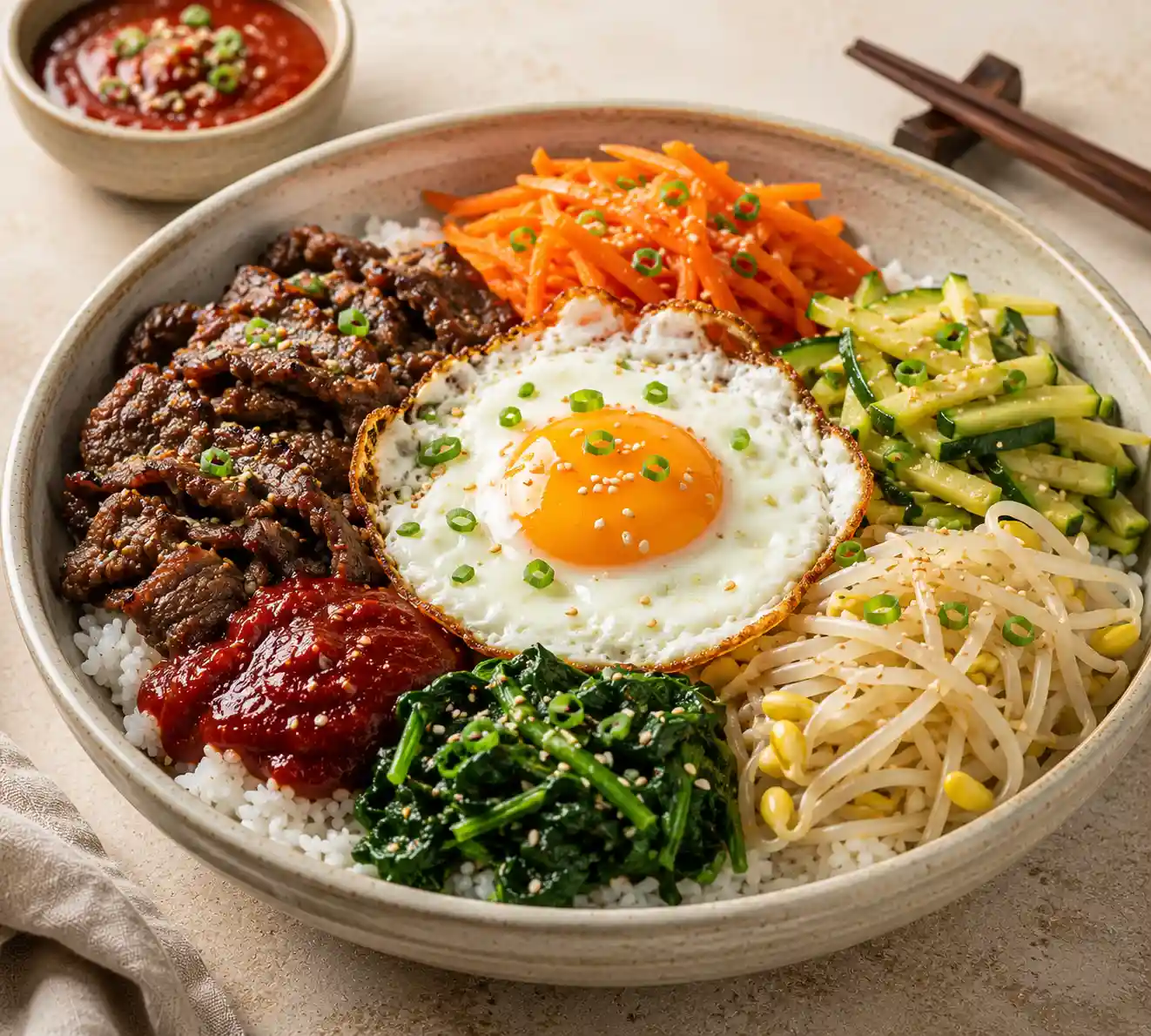
Bibimbap is one of Korea’s most famous and beloved dishes. The name literally means “mixed rice,” and it features a bowl of warm rice topped with colorful vegetables, seasoned beef, a fried egg, and spicy gochujang sauce.
This traditional Korean dish is known for its beautiful presentation and balanced flavors. Each ingredient contributes a unique texture and taste, creating a meal that is both nutritious and satisfying.
Bibimbap Recipe is highly customizable and can be adapted with different proteins and vegetables, making it perfect for family dinners, meal prep, or a restaurant-style meal at home.
Why You’ll Love This Bibimbap Recipe
There are plenty of reasons to add this recipe to your meal rotation.
- Packed with vegetables and nutrients
- High in protein
- Beautiful and colorful presentation
- Authentic Korean flavors
- Easy to customize
- Perfect for meal prep
- Balanced and satisfying meal
The combination of warm rice, savory beef, fresh vegetables, and spicy sauce creates an unforgettable flavor experience.
Also Read: Chicken Caesar Pasta Salad
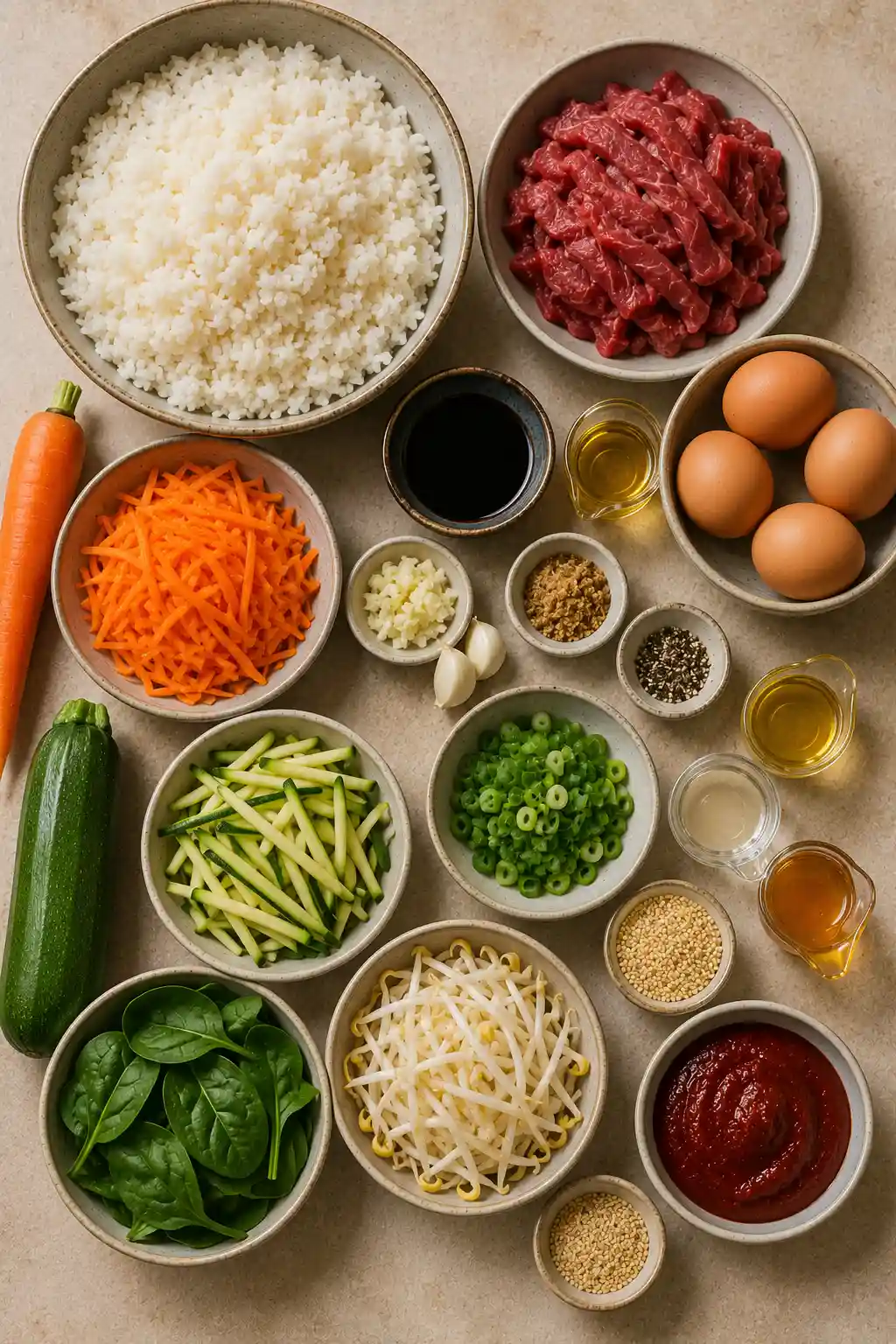
Ingredients You’ll Need in Bibimbap Recipe
For the Rice Bowl
- 2 cups cooked short-grain rice
- 250g beef sirloin, thinly sliced
- 1 carrot, julienned
- 1 zucchini, julienned
- 1 cup spinach
- 1 cup bean sprouts
- 4 eggs
- 2 green onions, sliced
- 1 tbsp sesame seeds
- 1 tbsp sesame oil
For the Beef Marinade
- 2 tbsp soy sauce
- 1 tbsp sesame oil
- 1 tsp brown sugar
- 2 garlic cloves, minced
- 1/2 tsp black pepper
For the Bibimbap Sauce
- 2 tbsp gochujang
- 1 tbsp sesame oil
- 1 tbsp rice vinegar
- 1 tsp honey
- 1 tsp sesame seeds
Ingredient Notes and Substitutions
Rice
Short-grain Korean rice provides the authentic texture, but jasmine rice can also be used.
Beef
Thinly sliced sirloin works best. Ground beef, chicken, or tofu are excellent alternatives.
Gochujang
This Korean chili paste is essential for authentic Bibimbap flavor.
Vegetables
Use fresh vegetables for the best texture and appearance.
How to Make Bibimbap
Step 1: Marinate the Beef
In a bowl, combine:
- Soy sauce
- Sesame oil
- Brown sugar
- Garlic
- Black pepper
Add beef and marinate for at least 15 minutes.
Step 2: Cook the Vegetables
Lightly sauté carrots, zucchini, spinach, and bean sprouts separately until tender but still vibrant.
Step 3: Cook the Beef
Heat a skillet over medium-high heat.
Cook the marinated beef until browned and fully cooked.
Step 4: Fry the Eggs
Cook eggs sunny-side up, leaving the yolks slightly runny.
Step 5: Prepare the Sauce
Mix gochujang, sesame oil, rice vinegar, honey, and sesame seeds until smooth.
Step 6: Assemble the Bowl
Add rice to serving bowls.
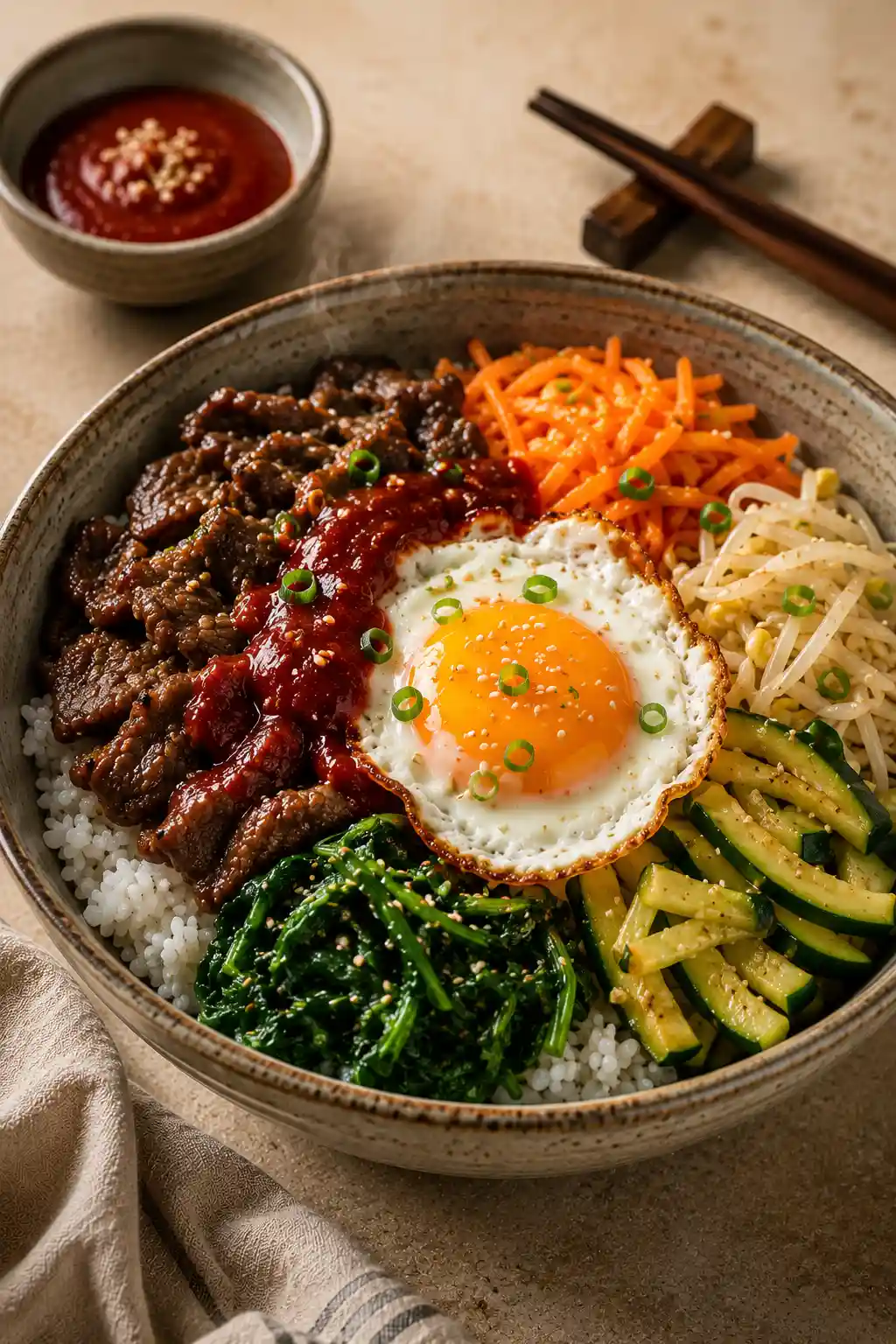
Arrange vegetables, beef, and egg neatly on top.
Step 7: Serve
Drizzle with Bibimbap sauce and sprinkle sesame seeds and green onions before serving.
Expert Tips for Success
Cook Vegetables Separately
This helps maintain their individual colors and textures.
Use Warm Rice
Warm rice helps blend all the flavors together.
Don’t Skip Gochujang
It provides the signature Korean flavor.
Keep Vegetables Colorful
Avoid overcooking to maintain freshness.
Mix Before Eating
Traditional Bibimbap is mixed thoroughly before eating.
Bibimbap Recipe
Ingredients
Equipment
Method
- Marinate beef with soy sauce and seasonings.
- Cook vegetables separately.
- Cook beef until browned.
- Fry eggs sunny-side up.
- Mix Bibimbap sauce ingredients.
- Add rice to bowls.
- Arrange vegetables, beef, and egg on top.
- Drizzle sauce and serve.
Notes
Easy Variations
Chicken Bibimbap
Replace beef with grilled chicken.
Vegetarian Bibimbap
Use tofu and extra vegetables.
Seafood Bibimbap
Add shrimp or salmon.
Spicy Bibimbap
Increase the amount of gochujang.
Low-Carb Version
Replace rice with cauliflower rice.
How to Store Leftovers
Store ingredients separately in airtight containers in the refrigerator for up to 3 days.
For best results:
- Keep sauce separate
- Reheat rice and beef before serving
- Add fresh egg when serving
Freezing is not recommended.
Frequently Asked Questions
What does Bibimbap mean?
Bibimbap means “mixed rice” in Korean.
Is Bibimbap healthy?
Yes. It contains protein, vegetables, healthy fats, and carbohydrates.
What sauce is used in Bibimbap?
Gochujang-based sauce is the traditional choice.
Can I make Bibimbap vegetarian?
Absolutely. Tofu and vegetables make an excellent vegetarian version.
Do you mix Bibimbap before eating?
Yes. Traditionally, all ingredients are mixed together before eating.
Final Thoughts
Bibimbap is a flavorful and nutritious Korean rice bowl that combines fresh vegetables, savory protein, rice, and spicy sauce into one satisfying meal. Its colorful appearance and balanced flavors make it one of the most popular Korean dishes worldwide.
Whether you’re exploring Korean cuisine for the first time or already love Asian food, this Bibimbap recipe is sure to become a favorite.